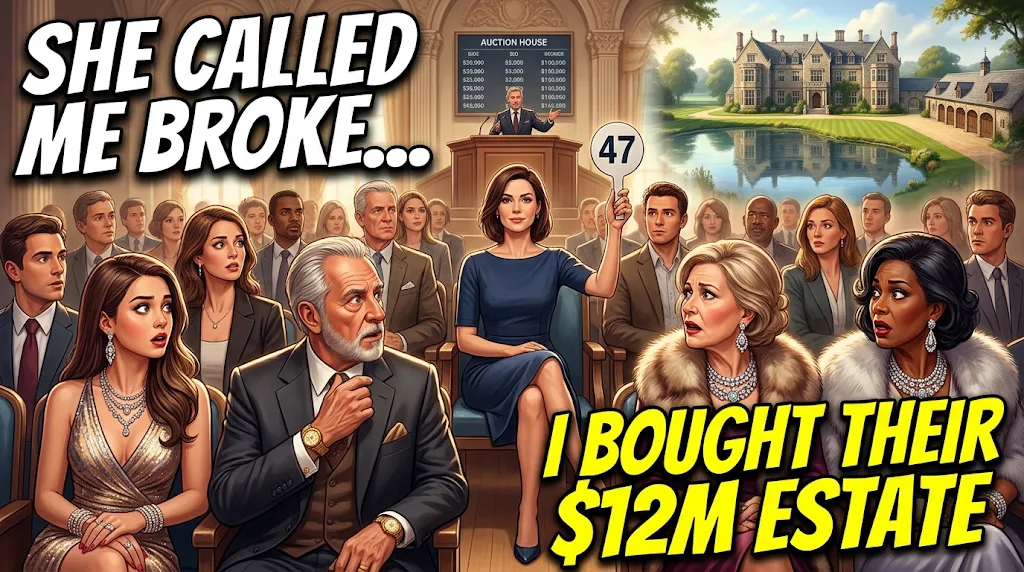
“HE STARTED IT. SOMEONE ELSE CONTINUED.”
I read my mother’s words again.
Then a third time.
My grandfather.
The man who had held me on his lap and called me his little princess.
The man who told me stories about Whitmore Estate.
The man who once promised I would never have to worry about money.
Had he been the one who started using my name?
“Stella?” Lawrence asked quietly.
I looked up.
“Tell me this isn’t what it looks like.”
He studied the photograph.
“I can’t tell you that until we understand what your mother meant.”
I gave a bitter laugh.
“Every time I think I’ve found the truth, someone I loved becomes another part of the mystery.”
Lawrence said nothing.
I looked down at the smiling man in the photograph.
My grandfather had died when I was seventeen.
I remembered standing beside his hospital bed.
His hands were thin.
His voice was weak.
But when I leaned close, he squeezed my fingers and whispered, “I tried to make things right, sweetheart.”
At the time, I thought he meant the arguments between my father and Gerald.
Now I wasn’t so sure.
I looked at Lawrence.
“What if he knew?”
“Knew what?”
“That someone was using my identity.”
Lawrence took a slow breath.
“Then we need to determine whether he authorized the original arrangement, whether it was lawful, and what happened afterward.”
I shook my head.
“He promised to protect me.”
“Maybe he believed he was.”
Those words hurt more than I expected.
Because protection had become the favorite excuse of everyone who kept secrets from me.
My father had protected me by staying silent.
My mother had protected me by hiding evidence.
Margaret had protected me by withholding information.
Lawrence had protected me by deciding which parts of my father’s final night I deserved to know.
And now I was being asked to consider that my grandfather might have used my name in some financial arrangement because he believed it was for my own good.
I was tired of being protected.
I wanted the truth.
I carefully returned the photograph to its protective sleeve.
“Can we find the original account documents?”
Lawrence nodded.
“We can try. If the accounts existed as described, there should be records showing how they were established and who had authority to operate them.”
“Then that’s what I want.”
“Stella, there’s something else we need to consider.”
I looked at him.
“Your grandfather may have created a legitimate trust or custodial arrangement for you when you were a child. That wouldn’t necessarily mean he committed fraud.”
I frowned.
“Then why would Mom write that someone else continued?”
“Perhaps the original arrangement changed after his death. Perhaps someone abused it. We don’t know.”
I stared at the photograph again.
My grandfather’s smile looked different now.
Not cruel.
Not innocent.
Simply unfamiliar.
And that frightened me.
Because I suddenly realized how little I knew about the people who had shaped my family’s history.
Margaret Ellis approached us.
“Ms. Bennett, the inspection period is nearly over.”
I nodded.
“Thank you.”
She glanced at the photograph.
“Would you like this item documented separately?”
“Yes, please.”
Lawrence arranged for the discovered documents to be preserved under a written inventory pending a determination of ownership and access.
I didn’t argue.
The notebook mattered too much to risk someone later claiming it had been altered.
As we left the guesthouse, I looked back toward the lake.
The water was perfectly still.
The same lake where my father had taught me to fish.
The same place where my mother had smiled for the photograph that now held more secrets than I knew how to understand.
I had bought Whitmore Estate to reclaim my family’s history.
But the deeper I looked, the more I feared that history might destroy the memories I had left.
Outside the gates, my phone rang.
Vanessa.
I hesitated.
Then answered.
“Stella?”
Her voice sounded exhausted.
“Yes.”
“Did you find something?”
I stopped walking.
“Why?”
“Because Dad just called me.”
My stomach tightened.
“What did he say?”
“He asked whether you’d found the red notebook.”
I glanced at Lawrence.
“What did you tell him?”
“Nothing.”
I waited.
Vanessa swallowed.
“Then he started crying.”
I froze.
“Gerald cried?”
“Yes.”
I couldn’t remember ever seeing my uncle cry.
Not at my grandfather’s funeral.
Not at my parents’ funeral.
Not when his business suffered during the recession.
Gerald Whitmore was a man who treated emotion like weakness.
“What did he say?”
Vanessa’s voice trembled.
“He said that if the notebook was found, everything he’d spent his life protecting would fall apart.”
I closed my eyes.
“Did he explain what he meant?”
“No.”
A pause.
“Stella, I don’t think Dad is afraid of losing money anymore.”
“Then what is he afraid of?”
Vanessa hesitated.
“I think he’s afraid of someone finding out what happened to your grandfather.”
My heart began pounding.
“What happened to him?”
“I don’t know. But Mom said Dad had never forgiven himself for the last night they spent together.”
I stood completely still.
My grandfather had died after a long illness.
That was what everyone told me.
He had been weak for months.
His health had been declining.
There had never been any reason to question his death.
“Vanessa, what are you saying?”
“I’m telling you what I heard.”
I swallowed.
“What else?”
“Dad said he should have listened when Grandfather told him to close the accounts.”
A cold feeling spread through my chest.
“Close what accounts?”
Vanessa lowered her voice.
“The ones in your name.”
I gripped the phone.
“Are you sure?”
“Yes.”
My grandfather had told Gerald to close them.
Then someone had continued using them.
My mother’s words suddenly made more sense.
HE STARTED IT. SOMEONE ELSE CONTINUED.
“Vanessa, when did your grandfather tell him that?”
“I don’t know.”
“Did he mention a date?”
“No.”
She hesitated.
“But Dad said something else.”
“What?”
“He said Grandfather left instructions in a letter.”
My heartbeat quickened.
“What letter?”
“I don’t know where it is. Mom said Dad destroyed it.”
I felt my stomach drop.
“Destroyed it?”
“That’s what she said.”
Lawrence, watching my expression, quietly asked me to put the call on speaker.
I told Vanessa he was listening.
She agreed.
“Vanessa,” Lawrence said, “do you know whether that letter was an original document or a copy?”
“No.”
“Did your father say he destroyed it?”
“No. Mom said he did.”
Lawrence nodded.
“Thank you. That’s an important distinction.”
There was a long silence.
Then Vanessa whispered, “Stella, can I ask you something?”
“Yes.”
“Do you hate me?”
The question caught me off guard.
For years, Vanessa had treated me like a joke.
She had mocked my clothes.
Photographed me without permission.
Encouraged relatives to laugh at my struggles.
And on the day of the auction, she had tried to humiliate me in front of a room full of strangers.
I could have told her I hated her.
Part of me wanted to.
Instead, I said, “I hate the way you treated me.”
She began crying.
“I know.”
“You made me feel like I didn’t belong in my own family.”
“I’m sorry.”
I looked down at the gravel beneath my shoes.
“Sorry doesn’t erase seven years.”
“I know.”
Her voice broke.
“But I didn’t know any of this was happening.”
“Neither did I.”
For a moment, neither of us spoke.
Then Vanessa whispered, “I don’t want to become like my parents.”
I swallowed.
“Then don’t.”
She started crying harder.
“I don’t know how to fix this.”
“You start by telling the truth.”
There was a long pause.
Then she said, “Okay.”
I ended the call.
Lawrence looked at me.
“Are you all right?”
I nodded.
But I wasn’t.
I had spent seven years believing Vanessa was my enemy.
Now she was the only person inside Gerald’s household willing to speak to me.
That didn’t erase what she’d done.
But it meant I couldn’t assume everyone would remain exactly who they had always been.
Sometimes people changed.
And sometimes the truth forced them to.
Two days later, I sat in the office of an attorney named Rebecca Shaw.
She specialized in complex inheritance disputes and financial misconduct.
Lawrence had agreed to provide records for an independent review, and I wanted someone who had never met my father or worked with the Whitmore family.
Rebecca was direct.
She didn’t waste time with comforting phrases.
She examined the preliminary ownership agreement.
The disputed waiver.
The photocopied blue ledger pages.
The red notebook entries.
My mother’s handwritten statement.
And the photograph of my grandfather.
Then she removed her glasses.
“Stella, I want to separate what we know from what we suspect.”
I nodded.
“Good.”
“First, there’s evidence that your father was considered for a substantial interest in the family holding company.”
“Forty percent.”
“That’s what the preliminary agreement suggests.”
“Second?”
“The later records indicate that he did not receive that interest. A purported waiver appears to explain the change, but its authenticity hasn’t been established.”
I leaned forward.
“And the accounts in my name?”
Rebecca looked at me.
“That’s the third issue. We have allegations of accounts or entities established using your identity when you were a minor, but we haven’t yet verified the underlying records.”
I swallowed.
“Richard said eighteen million dollars passed through them.”
“That could mean many things. Transaction volume isn’t the same as an account balance or money you personally owned.”
I nodded.
“And Grandfather?”
Rebecca examined the photograph.
“If he established a trust for you, the documents should show its purpose, trustees, beneficiaries, and any changes in control.”
I looked down.
“Could Gerald have taken over after Grandfather died?”
“Possibly. But we need evidence.”
She opened another folder.
“I’ve already prepared a records request for the institutions identified in the documents, subject to the proper legal process.”
I looked up.
“How long will it take?”
“We’ll begin with what can be obtained voluntarily, then determine whether formal proceedings are necessary.”
I sighed.
Rebecca studied me.
“There’s something I want you to remember.”
“What?”
“Discovering wrongdoing doesn’t always happen through a dramatic confession. Sometimes it happens because one ordinary document contradicts another.”
I almost smiled.
After everything I’d experienced, ordinary documents sounded wonderful.
Then Rebecca reached for a thin file.
“And we may already have our first contradiction.”
My heart jumped.
“What is it?”
She placed a photocopy on the desk.
A corporate filing dated March 2002.
At the top was a familiar name.
WHITMORE FAMILY HOLDINGS.
Below it appeared an entity I had never heard of.
BENNETT CHILDREN’S BENEFIT TRUST.
I stared.
“That’s me?”
“Possibly. The trust name matches your family, and other details suggest you may have been the intended beneficiary.”
I looked at the date.
2002.
I would have been around eight years old.
“Who created it?”
Rebecca pointed to the document.
“Your grandfather was listed as the original settlor.”
My breath caught.
“So Richard was telling the truth?”
“At least about the existence of a related arrangement. We still need the trust instrument and account records.”
I examined the page.
Then I noticed another name.
GERALD WHITMORE.
Beside it were the words:
SUCCESSOR TRUSTEE.
My stomach tightened.
“Gerald?”
Rebecca nodded.
“He was named as someone who could assume control under certain circumstances.”
I stared.
My grandfather had created something intended for me.
And Gerald had been positioned to control it.
“Was he allowed to use the money?”
“Not for his own benefit simply because he was trustee. His obligations would depend on the trust terms and applicable law.”
I swallowed.
“Did he become trustee?”
Rebecca turned the page.
“According to a later filing, yes.”
I felt cold.
“When?”
“After your grandfather’s death.”
I stared at the paper.
The room seemed to shrink around me.
My grandfather had died when I was seventeen.
Gerald had taken over the trust.
And he had never told me it existed.
“Why wouldn’t he tell me?”
Rebecca looked serious.
“That’s one of the questions we’ll need answered.”
I remembered being nineteen.
Standing in a funeral home.
Asking Gerald for help covering my parents’ burial expenses.
He had looked at me and said, “Stella, everyone has responsibilities. You need to learn to handle your own.”
I remembered going home and counting the money in my bank account.
I remembered taking extra shifts.
Selling furniture.
Skipping meals.
While Gerald was apparently connected to a trust created for my benefit.
My hands began trembling.
“Rebecca, I asked him for help after my parents died.”
She waited.
“He told me there was nothing he could do.”
Her expression softened.
“I’m sorry.”
I shook my head.
“I don’t want sympathy. I want to know whether there was money meant for me.”
“Then that’s what we’ll establish.”
She turned to another page.
“And there’s something else.”
My pulse quickened.
“Another document?”
“Yes.”
It was an annual filing from 2020.
A year after my parents died.
The trust still appeared to be active.
But the listed administrative contact had changed.
From Gerald Whitmore.
To Patricia Whitmore.
I stared at the name.
“Patricia?”
Rebecca nodded.
“She’s listed as the contact for an associated management entity. That doesn’t establish she was trustee, but it suggests involvement.”
I looked at the filing.
“Why would she be involved?”
“We’ll need to ask.”
I sat back.
For years, Patricia had laughed whenever I mentioned saving money.
She once told me that girls like me needed to stop dreaming about luxury and learn to live within their means.
And all that time, she might have had access to information about financial arrangements created for me.
I thought of my mother’s warning.
The person who appears to benefit is not always the person responsible.
Perhaps Patricia had been more involved than anyone realized.
Or perhaps someone had used her as a convenient name.
Then Rebecca said something that made me sit forward.
“There’s one final detail in this filing.”
“What?”
“The trust wasn’t listed as terminated.”
I frowned.
“What does that mean?”
“It means the available filing doesn’t establish that the arrangement ended. It may still have been active as of that date.”
My heart pounded.
“Could it still exist now?”
“Possibly.”
I stared.
After years of living in a tiny apartment.
After years of carefully building my savings.
After spending twelve and a half million dollars to buy a house my relatives claimed I could never afford.
There might still be another financial structure connected to my name.
And I knew almost nothing about it.
I looked at Rebecca.
“Find it.”
She nodded.
“We will investigate.”
That evening, I returned to the hotel.
I had spent most of the day reviewing documents.
My head ached.
My eyes burned.
And every new discovery seemed to make the people I once trusted look less familiar.
I set my handbag on the desk.
Then took out my grandfather’s photograph.
The little girl on his lap looked so happy.
I remembered him giving me a silver bracelet for my seventh birthday.
It had a tiny heart-shaped charm.
He told me it was special because it would remind me that I belonged to the family no matter what happened.
I hadn’t worn it in years.
But I still had it.
I opened my jewelry pouch.
There it was.
A delicate silver chain.
A tiny heart.
The clasp was slightly bent.
I held it in my palm.
Then I noticed something strange.
The heart-shaped charm was thicker than I remembered.
I turned it over.
There was a tiny seam around its edge.
My pulse quickened.
Not another secret.
Surely not.
But after the scrapbook and music box, I could no longer dismiss small details.
I carefully examined the charm.
On the back, nearly worn away, were two engraved letters.
S.B.
My initials.
Below them was a tiny number.
17.
I frowned.
Seventeen.
My grandfather died when I was seventeen.
Was it a coincidence?
I turned the charm beneath the lamp.
There was a small hinge.
I gently pressed the edge.
The heart opened.
Inside was a miniature folded strip of paper.
My breath caught.
I unfolded it carefully.
Only one sentence.
“Ask Gerald why the trust changed on your seventeenth birthday.”
My heart began pounding.
My seventeenth birthday.
Not my grandfather’s death.
Not my parents’ accident.
My birthday.
Something had happened to the trust when I turned seventeen.
I immediately photographed the note and sent it to Rebecca.
Then I called.
She answered after the second ring.
“Stella?”
“I found something.”
I explained the bracelet.
The tiny paper.
The message.
She listened quietly.
Then said, “That date may matter.”
“Why?”
“Because a trust can include provisions tied to a beneficiary reaching a certain age.”
I swallowed.
“Could Gerald have changed it?”
“That depends on the trust terms and his authority.”
I looked at the note.
“Who would have known the trust changed?”
“Someone with access to its administration.”
I stared at my grandfather’s handwriting.
“Rebecca, I think Grandfather was warning me.”
“Perhaps. But we should authenticate the note and obtain the original trust documents.”
I nodded.
“Okay.”
After the call, I sat alone with the bracelet.
My grandfather had given it to me when I was seven.
Had he placed the note inside years later?
Had someone else done it?
I couldn’t know.
But the message was specific.
My seventeenth birthday.
That gave us something concrete to investigate.
At ten fifteen, my phone vibrated.
A message from Vanessa.
“Stella, I need to tell you something before Dad finds out.”
I sat up.
“What happened?”
She replied:
“I went through Mom’s old filing cabinet.”
My heart quickened.
“Why?”
“Because I wanted to know whether they were lying about your trust.”
I stared at the screen.
Another message appeared.
“I found a folder with your name on it.”
My pulse raced.
“What was inside?”
“Letters. Bank statements. Something called a beneficiary notice.”
I sat forward.
“Can you send photographs?”
A pause.
Then:
“Yes. But there’s something you need to know first.”
I waited.
“Mom has been hiding this folder for years.”
My stomach tightened.
“How do you know?”
“Because the folder was inside a locked cabinet behind her wedding photographs.”
I stared.
Another message.
“And Stella…”
“What?”
“There’s a letter addressed to you.”
My breath caught.
“From whom?”
“Your grandfather.”
My hands began shaking.
“What’s the date?”
Vanessa answered.
“Your seventeenth birthday.”
I closed my eyes.
The bracelet.
The note.
The trust.
Everything pointed to the same day.
“Send it,” I typed.
A photograph arrived.
I opened it.
My grandfather’s handwriting filled the page.
At the top:
MY DEAREST STELLA.
I began reading.
“On the day you turn seventeen, I want you to know that I have arranged something for your future.
You may not understand its value yet, but I hope it will give you the freedom to make your own choices.
I have made mistakes in my life. Some of them hurt your father.
I cannot change the past.
But I can try to protect what comes next.”
Tears filled my eyes.
I continued.
“The trust created in your name was intended to provide for your education, your security, and your eventual independence.
It must never be used to benefit Gerald, Patricia, or any other member of the family at your expense.”
I stopped breathing.
Then I reached the final paragraph.
“If you have not received this letter by your seventeenth birthday, ask your father to request a complete accounting.
If Gerald refuses, tell Daniel to contact Richard Vale.
Richard knows where the original agreement is kept.”
My heart pounded.
Richard Vale.
Again.
But then I noticed something that made me freeze.
A handwritten addition at the bottom.
Different ink.
Different handwriting.
“DO NOT SEND. G.W.”
Gerald Whitmore.
My uncle had apparently intercepted the letter.
He had prevented me from learning about the trust.
And my grandfather had specifically warned that the money must not be used for Gerald’s or Patricia’s benefit.
I stared at the photograph.
My hands began shaking.
I called Vanessa.
She answered immediately.
“Did you read it?”
“Yes.”
Her voice trembled.
“Stella, I think my parents stole something from you.”
I swallowed.
“We don’t know that yet.”
“But why would Dad stop you from receiving the letter?”
I had no answer.
Vanessa began crying.
“I keep thinking about all the horrible things I said to you.”
I closed my eyes.
“Vanessa…”
“No, listen. I laughed at your apartment. I laughed at your clothes. I made everyone think you were a failure.”
Her voice broke.
“And maybe the whole time, my parents were hiding money your grandfather wanted you to have.”
I felt tears rising.
“Vanessa, we need the original documents.”
“I know.”
“Don’t remove anything that could put you in danger. Let Rebecca arrange a safe way to preserve what you’ve found.”
“Okay.”
She hesitated.
“Stella?”
“Yes?”
“I want to help you.”
I swallowed.
“Then keep telling the truth.”
There was a long silence.
Then Vanessa whispered, “I will.”
The next morning, Rebecca called me.
Her voice was unusually serious.
“Stella, I received a response concerning the trust.”
I sat up.
“Already?”
“One institution confirmed that a related account relationship existed. They’re still determining what records can be released and through which legal process.”
My heart jumped.
“So it was real?”
“There’s confirmation of an associated financial arrangement. We still need the governing documents.”
I pressed my hand against my chest.
“What else?”
Rebecca hesitated.
“The records also show that the administrative structure changed around your seventeenth birthday.”
I froze.
“The note was right.”
“It appears to correspond to a real change.”
“What changed?”
“Control arrangements connected to the trust.”
I swallowed.
“To Gerald?”
“He was already named as successor trustee in an earlier filing. But this change involved an additional entity.”
My heart raced.
“What entity?”
Rebecca read the name.
“Vale Asset Management.”
I stopped breathing.
Richard Vale.
The man who tried to bargain for my silence.
The man who claimed my name had been used to move millions.
The man whose son disappeared after investigating the accounts.
I stared at the wall.
“Richard controlled the trust?”
“We can’t conclude that yet. But his firm’s name appears in the administrative records.”
I closed my eyes.
Then I remembered something Richard had said at the gates.
Your father discovered a truth he didn’t know how to handle.
“Rebecca, could Richard have known exactly where the money went?”
“His firm’s involvement gives us a strong reason to request those records.”
I swallowed.
“Do it.”
She paused.
“There’s another detail.”
My stomach tightened.
“What?”
“The associated account records include a transfer instruction dated shortly after your parents’ deaths.”
I froze.
“How much?”
“Six million dollars.”
I couldn’t speak.
Rebecca continued.
“We don’t yet know the source and destination of every part of that transaction. But the instruction references an entity connected to the Whitmore holdings.”
My hands began shaking.
“Who signed it?”
She hesitated.
“That’s what concerns me.”
“Rebecca.”
“The document bears your name.”
My heart stopped.
“What?”
“Stella Bennett.”
I stared at the wall.
“I never signed anything.”
“I understand.”
“I was nineteen. I was trying to pay funeral expenses. I didn’t even know a trust existed.”
Rebecca’s voice remained steady.
“Then we need to examine the original instruction and authenticate the signature.”
I swallowed.
“Who submitted it?”
“That information hasn’t been confirmed.”
I looked at the photograph of my grandfather on the desk.
The little girl.
The smiling old man.
The promise.
And now a six-million-dollar transfer bearing my name.
I whispered, “Someone used my identity after my parents died.”
Rebecca answered carefully.
“That’s a serious possibility we need to investigate.”
I closed my eyes.
For a moment, I felt nineteen again.
Alone.
Frightened.
Desperate to understand how the people who raised me had suddenly disappeared from my life.
But I wasn’t nineteen anymore.
I wasn’t powerless.
I had resources.
I had independent counsel.
And I had finally learned to stop accepting my relatives’ version of the truth.
“Rebecca, I want to know who authorized that transfer.”
“We’ll pursue the records.”
“And I want to know where the money went.”
“That’s part of the investigation.”
I looked at the bracelet in my hand.
My grandfather’s promise had not disappeared.
Someone had simply hidden it.
And I was going to find out why.
That afternoon, Vanessa called again.
Her voice sounded frightened.
“Stella, Dad knows I found the folder.”
My heart jumped.
“How?”
“I think Mom noticed it had been moved.”
“Are you safe?”
“Yes. I’m not at the house.”
I exhaled.
“Good.”
Vanessa lowered her voice.
“But Dad left me a voicemail.”
“What did he say?”
She hesitated.
“He said if I kept helping you, I’d destroy the family.”
I closed my eyes.
“Vanessa, you’re not responsible for protecting secrets you didn’t create.”
She began crying.
“I know.”
A pause.
“There’s something else.”
“What?”
“Mom called me after Dad.”
I frowned.
“What did she want?”
“She told me not to believe everything Dad said.”
My pulse quickened.
“About what?”
“The trust.”
I sat forward.
“What did Patricia say?”
Vanessa took a shaky breath.
“She said Dad wasn’t the one who started taking the money.”
My heart pounded.
“Then who?”
“She wouldn’t tell me.”
I gripped the phone.
“What else did she say?”
Vanessa hesitated.
“She said Grandfather made an arrangement that he later regretted.”
I looked down at the photograph.
“An arrangement with Richard Vale?”
“I don’t know.”
Vanessa swallowed.
“But Mom said something about a secret partnership.”
My stomach tightened.
“What partnership?”
“Between Grandfather and someone who wasn’t supposed to own part of the Whitmore company.”
I frowned.
“Who?”
“She wouldn’t say.”
I closed my eyes.
Everything kept circling back to the same names.
Gerald.
Patricia.
Richard Vale.
My grandfather.
And the trust created in my name.
But I was beginning to suspect that the missing money wasn’t the only secret.
Something had happened decades earlier.
Something that connected the Whitmore family to Richard Vale in a way nobody wanted explained.
“Vanessa, did Patricia mention any documents?”
“Yes.”
My heart jumped.
“What?”
“She said the truth was in the original partnership agreement.”
I sat forward.
“Where is it?”
Vanessa hesitated.
“Mom said Richard has it.”
I looked toward the window.
Richard Vale.
The man who had offered me the ownership waiver in exchange for silence.
The man who claimed his own son had disappeared.
The man who seemed to know far more than he admitted.
“Vanessa, thank you.”
She whispered, “Be careful.”
The call ended.
I immediately contacted Rebecca.
She listened while I explained the conversation.
Then she said, “Stella, I want to show you something.”
“What?”
“I’ve been reviewing the historical corporate filings.”
“And?”
“There’s a company that appears repeatedly in the old transactions.”
I grabbed a pen.
“What’s it called?”
“Harbor Crest Investments.”
I wrote down the name.
“Who owned it?”
“That information isn’t clear from the records we have.”
I frowned.
“Why does it matter?”
“Because several payments associated with the Whitmore restructuring were routed through entities connected to it.”
My pulse quickened.
“Was Richard involved?”
“His firm’s name appears in correspondence, but we haven’t established the full ownership structure.”
I looked at my grandfather’s photograph.
“Could Harbor Crest be the secret partnership Patricia mentioned?”
“Possibly.”
Rebecca paused.
“There’s one more thing.”
I held my breath.
“What?”
“The earliest document I’ve located referencing Harbor Crest is dated 1998.”
The year my grandfather wrote his warning letter.
The year my father’s interest began to disappear from the records.
The year everything seemed to change.
I stared at the name.
Harbor Crest Investments.
It meant nothing to me.
But the more I looked at it, the more I felt that I had finally found the beginning of the story.
Not the beginning of my suffering.
The beginning of the secret.
Then Rebecca spoke again.
“Stella, I also found a reference to a private meeting held shortly before the original restructuring.”
My heart quickened.
“Who attended?”
“Your grandfather. Gerald. Richard Vale.”
I waited.
“And?”
Rebecca hesitated.
“A fourth person.”
My pulse raced.
“Patricia?”
“No.”
I frowned.
“Then who?”
Rebecca took a slow breath.
“Your father.”
I stared.
“Dad?”
“Yes.”
I looked at the documents scattered across my desk.
“What was the meeting about?”
“The agenda describes a proposed transfer of assets into a family-benefit arrangement.”
My heart pounded.
“In my name?”
“That’s one possibility.”
I swallowed.
“Did Dad agree?”
“We don’t have the minutes from the meeting.”
I closed my eyes.
“Then how do we find out?”
Rebecca paused.
“There may be another way.”
“What?”
“An old recording.”
I froze.
“What recording?”
“The corporate archive references an audio record of that meeting.”
I sat forward.
“Does it still exist?”
“I don’t know yet.”
“Can we find it?”
“I’m trying.”
I stared at my grandfather’s photograph.
An audio recording.
A meeting.
A secret partnership.
An arrangement created in my name when I was a child.
For the first time, I wondered whether the entire story might be far more complicated than a greedy uncle stealing an inheritance.
Perhaps my grandfather had created something he believed would protect me.
Perhaps Gerald and Richard had changed its purpose.
Perhaps my father had discovered the truth years later.
And perhaps my mother had spent her final days trying to save me from the consequences.
Then my phone vibrated.
A message from an unfamiliar number.
“Stella Bennett?”
I stared.
“Who is this?”
The response came immediately.
“Adrian Vale.”
My entire body went cold.
Richard’s missing son.
The forensic accountant who had helped my father.
The man allegedly seen outside my apartment building.
I sat completely still.
Another message appeared.
“I know Richard came to see you.”
My fingers trembled.
I typed:
“Where have you been?”
His answer came after a long pause.
“Trying to stay alive.”
I stared.
Then another message.
“Your father discovered something in 2019 that would have destroyed more than the Whitmore family.”
I swallowed.
“What did he discover?”
The typing indicator appeared.
Disappeared.
Then returned.
Finally:
“The trust was never just about your inheritance.”
My heart pounded.
“What was it about?”
A long silence.
Then:
“Your grandfather created it to hide a partnership.”
I sat forward.
“With Richard?”
“No.”
My breath caught.
“Then who?”
Adrian’s reply appeared.
“Someone your family has spent thirty years pretending never existed.”
I stared at the screen.
Another message followed.
“Your mother found out who that person was.”
I swallowed.
“Tell me.”
The reply came slowly.
“Before I do, I need to know whether you’ve read the last page of the red notebook.”
My heart raced.
“Yes.”
“All of it?”
I frowned.
“What do you mean?”
Another message.
“There’s a page sealed inside the back cover.”
I stopped breathing.
We had found one folded note behind the lining.
But Adrian seemed to be describing something else.
I typed:
“What is on that page?”
The response made my hands shake.
“Your grandfather’s confession.”
My heart nearly stopped.
“Confession to what?”
The typing indicator appeared.
Then disappeared.
For almost a minute, nothing happened.
Finally, a message arrived.
“Stella, the original money wasn’t stolen from your father.”
I stared.
Another message followed.
“It was stolen from someone else.”
My mouth went dry.
“Who?”
Adrian answered with a sentence that changed everything.
“Your grandfather’s eldest child.”
I stared at the screen.
My grandfather had two sons.
Gerald.
And my father, Daniel.
At least, that was what I had always been told.
I typed:
“My father was his younger son.”
Adrian replied:
“Yes.”
My heartbeat thundered.
“Then who was the eldest?”
There was a long silence.
Finally, Adrian sent one last message.
“Stella, your grandfather had a daughter before either of his sons was born.”
I couldn’t breathe.
“A daughter?”
“Yes.”
“Where is she now?”
The answer appeared.
“Alive.”
My hands began shaking.
“What’s her name?”
Adrian responded:
“Her name was changed after she was sent away as a child.”
I stared.
“Then how do I find her?”
His final message appeared.
“You already know her, Stella.”
“She has been helping you since the day you bought Whitmore Estate.”
My heart stopped.
Margaret Hale.
The woman who claimed to be my grandfather’s secretary.
The woman who knew about the blue ledger.
The woman who had kept my father’s documents for seven years.
Adrian sent one final sentence.
“Ask Margaret why your grandfather never allowed her to call him Dad.”
TO BE CONTINUED IN PART 8 — THE DAUGHTER MY GRANDFATHER ERASED FROM OUR FAMILY
PART 7 — THE PROMISE MY GRANDFATHER BROKE BEFORE HE DIED